Cow Ghee Diya and the Environment: Why Clay and Cow Ghee Are a Responsible Choice
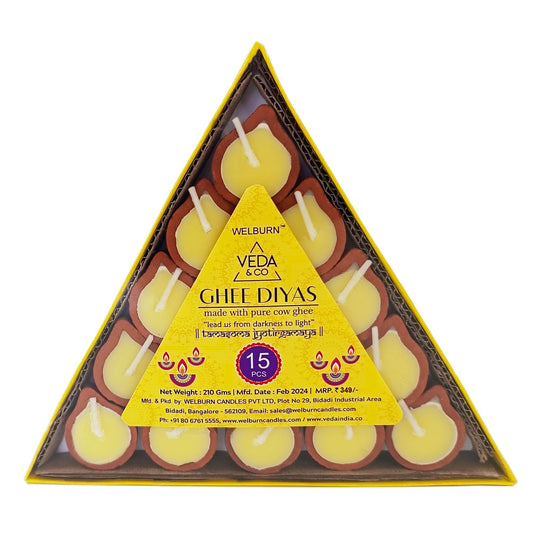
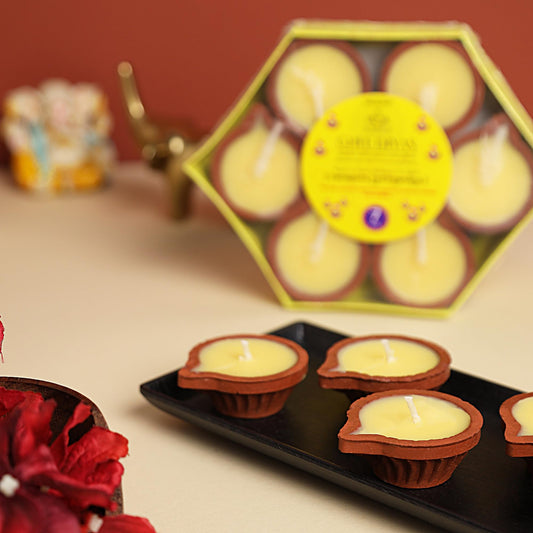
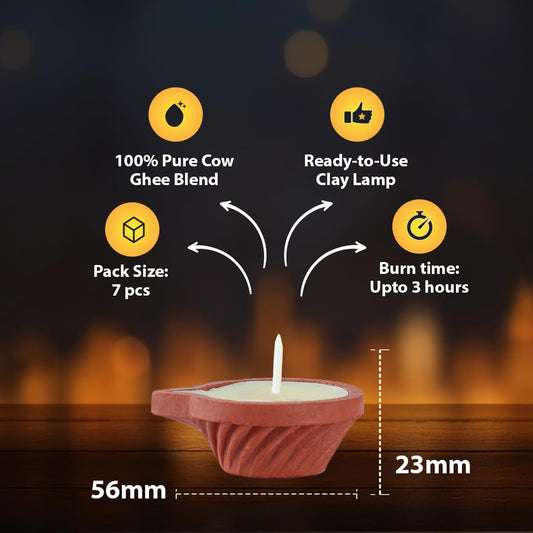
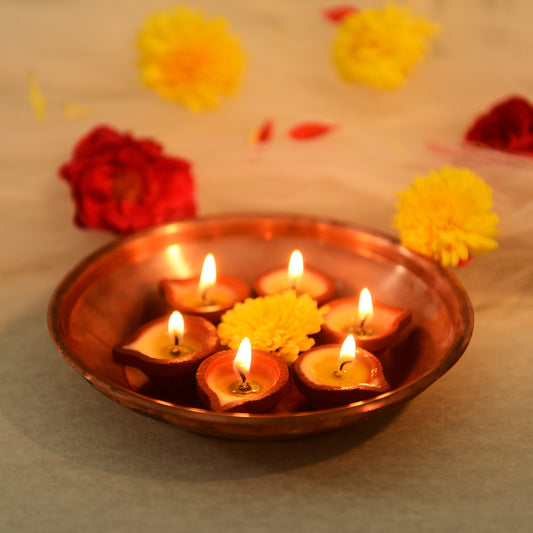
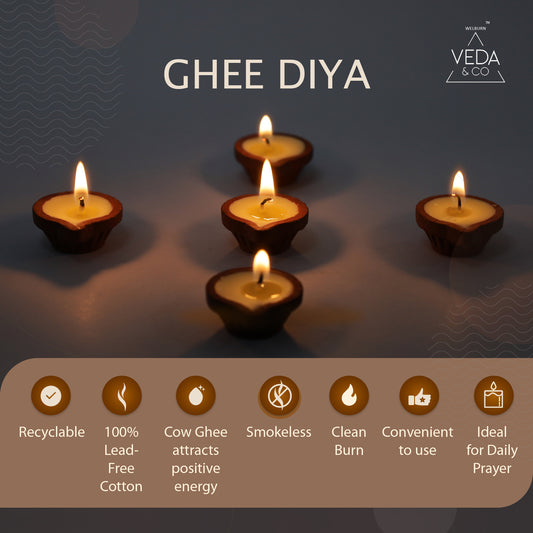
As Indian households become more conscious about their environmental footprint, the materials used in daily rituals are worth examining. The combination of clay and cow ghee in Veda & Co's ready-to-use diyas is — from a material standpoint — one of the most ecologically sound options available in the lamp category.
The Clay Diya: Fully Biodegradable
Clay diyas are made from natural earthen material that, when returned to soil, decomposes without leaving any residue. Unlike synthetic or plastic lamp holders, there is no microplastic concern, no toxic breakdown product, and no waste that persists for decades.
After a Veda & Co clay diya has burned out, it can be:
- Placed directly in a garden or plant pot — the clay adds trace minerals to the soil as it breaks down.
- Added to a compost pile — the terra cotta material is inert to compost organisms.
- Returned to natural water if part of a festival immersion practice — clay dissolves cleanly without water pollution.
The relationship between clay biodegradability and Indian soil health is discussed at Down to Earth India in their coverage of eco-festival practices.
Cow Ghee: A Natural, Food-Grade Fuel
The combustion byproducts of pure cow ghee are significantly cleaner than paraffin wax (petroleum-derived), synthetic oil blends, or adulterated ghee. When pure cow ghee burns:
- The primary combustion products are water vapour and carbon dioxide — the same as any organic material.
- There are no petrochemical residues, benzene compounds, or heavy particulate matter of the kind associated with paraffin combustion.
- Any residual ghee left in the clay diya after burning is a food-grade natural fat — it adds organic content to soil when the clay diya is composted.
Comparison With Alternatives
|
Lamp Type |
Material |
Combustion |
End of Life |
|
Cow ghee clay diya |
Natural clay + cow ghee |
Clean, minimal soot |
Compostable, soil-safe |
|
Paraffin wax candle |
Petroleum wax |
More soot, hydrocarbons |
Non-biodegradable wax |
|
Synthetic oil lamp |
Plastic + blended oil |
Variable, often smoky |
Plastic waste |
|
Electric diya |
Plastic, electronic |
No combustion |
Electronic waste |
Eco-Friendly Festival Use
For Diwali and other festivals, the shift away from plastic and synthetic items toward clay diyas has been supported by environmental organisations. WWF India's eco-festival guidance regularly advocates for returning to natural, biodegradable ritual materials — a category Veda & Co's clay cow ghee diyas fit directly.
Using the 60-piece pack for festival decoration means all the diyas can be composted or returned to soil after use — a zero-waste festival practice that replaces synthetic alternatives.
Frequently Asked Questions
Q: Is it safe to put a used clay diya directly in my plant pot?
A: Yes — natural clay from diyas is safe for soil and plants. Any residual ghee provides a small amount of organic matter. Break the diya into smaller pieces for faster breakdown if needed.
Q: Does Veda & Co use any packaging materials that are non-recyclable?
A: For specific packaging material enquiries, contact Veda & Co directly through the website. The company's focus on natural clay and pure cow ghee extends to the overall product ethos.
Q: Are cow ghee diyas better than electric diyas from an environmental standpoint?
A: Clay cow ghee diyas produce combustion byproducts that electric diyas do not — this is a genuine trade-off. However, electric diyas create electronic waste at end of life and require ongoing electricity consumption. The comparative impact depends on factors like your electricity source and how long the electric diya lasts before disposal.
Q: Can I use the residual ghee from an unused diya for another purpose?
A: Veda & Co's diyas use ghee specifically prepared for lamp use. It is not intended for cooking or consumption. For safe disposal of residual ghee, composting or soil addition is the recommended approach.