Cow Ghee Diya for Aarti: Which Pack Works Best and How to Use It
Aarti involves holding a lit diya and waving it in a circular motion before the deity — a use case that is different from simply placing a diya on an altar and walking away. The diya is in motion, in your hand, and needs to remain stable and burning throughout. This guide covers which Veda & Co pack is best for aarti and how to handle it safely.
Browse the range at vedaindia.co/collections/ghee-diya.
Why Aarti Has Specific Diya Requirements
During aarti, the diya is held and moved. This means:
- The ghee inside is subject to slight motion — it should be in a well that is deep enough to retain it during gentle circular movement.
- The flame needs enough ghee volume to remain burning for the full duration of the aarti without running dry.
- The clay diya must be stable enough to hold on a small thali without tipping.
The tradition and purpose of aarti are covered in detail at Britannica's entry on the ritual.
Which Pack to Use for Aarti
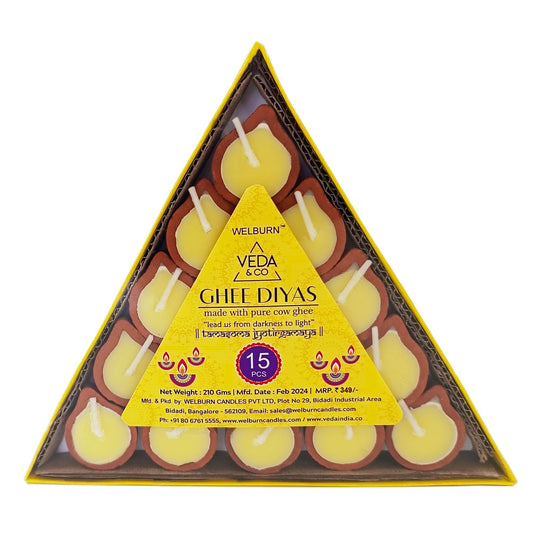
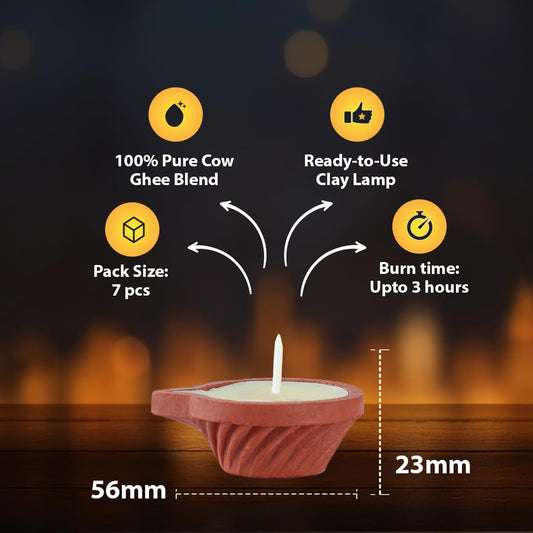
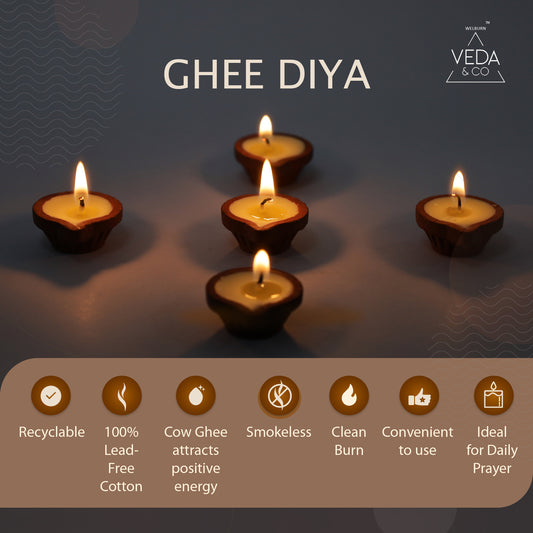
For a standard-length aarti of 5 to 15 minutes, any of Veda & Co's ready-to-use packs work well — the 50 to 55-minute burn is more than sufficient for a typical aarti session. The choice comes down to how the diya sits on your thali during movement:
- Standard packs (15, 30, 60-piece): These diyas are compact and sit flat on a thali. For brief to moderate-length aarti, they work without adjustmen
- 7-piece pack: The diyas in this pack hold more ghee and have a slightly deeper well — they are less likely to spill during a longer aarti session and are better suited if your aarti runs more than 20 to 30 minutes.
How to Hold the Diya During Aarti
- Use a flat metal thali as your aarti plate — it gives you a stable surface to hold, keeps the diya in place, and distributes weight evenly.
- Hold the thali with both hands — your dominant hand at the edge and your other hand supporting from below. This gives you the most control during the circular waving motion.
- Move in smooth, steady circles — sudden or jerky movements cause the ghee to slosh inside the clay well and may cause the flame to flicker or extinguish.
- Keep the aarti thali at an even height throughout. Tilting the thali at extreme angles will move the ghee away from the wick and weaken the flame.
- Safety During Aarti
- An open flame in motion has specific safety considerations. NDMA India's home fire safety guidance is worth reviewing:
- Never perform aarti near curtains, hanging fabric, or low-hanging decorations.
- Ensure children watching aarti are at a safe distance from the moving flame.
- After aarti, set the thali down on a flat, stable surface and allow the flame to continue burning — do not blow it out; snuff it gently with a cloth or allow it to burn out.
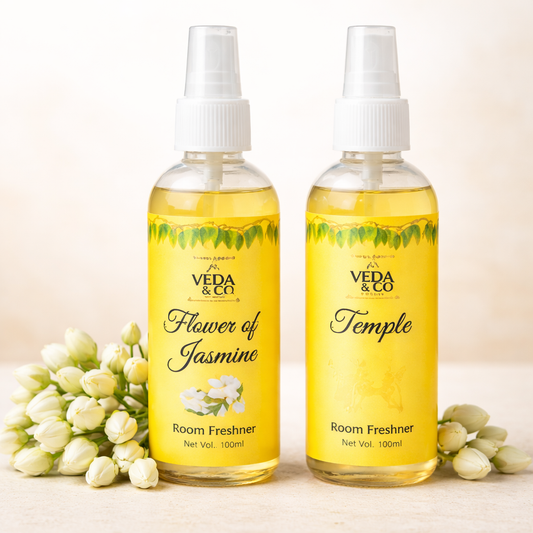
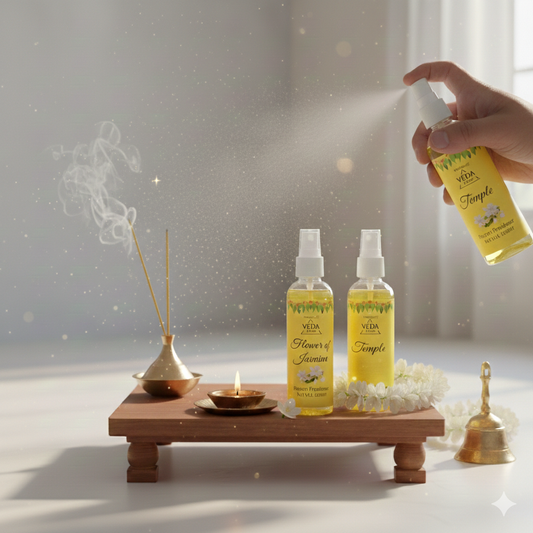
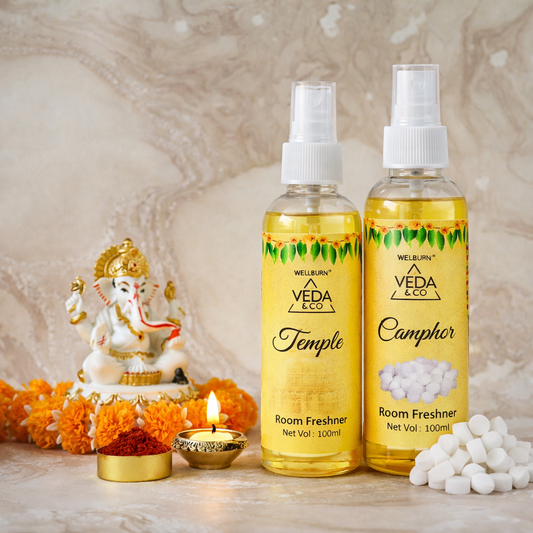
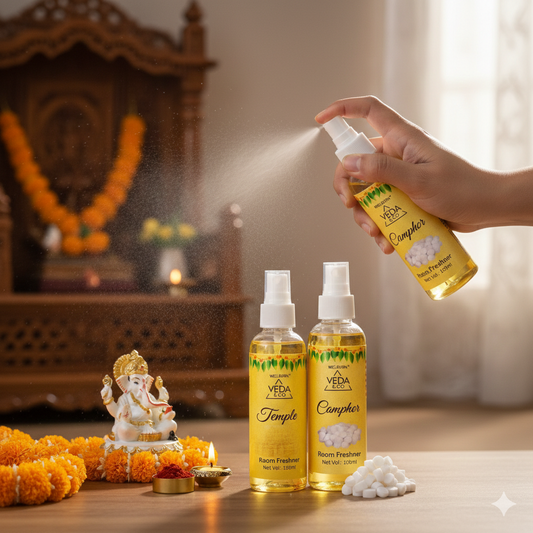
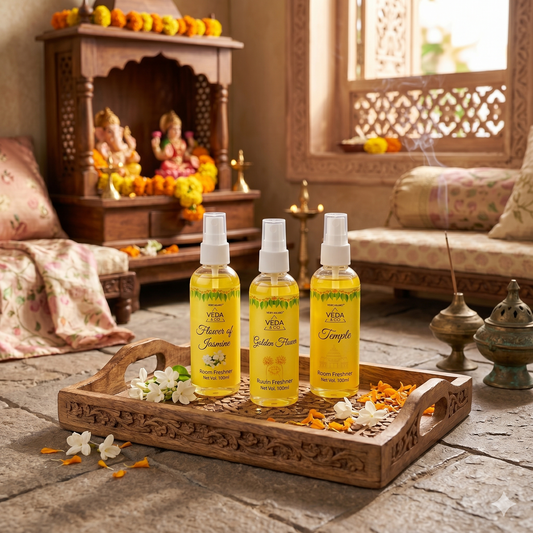
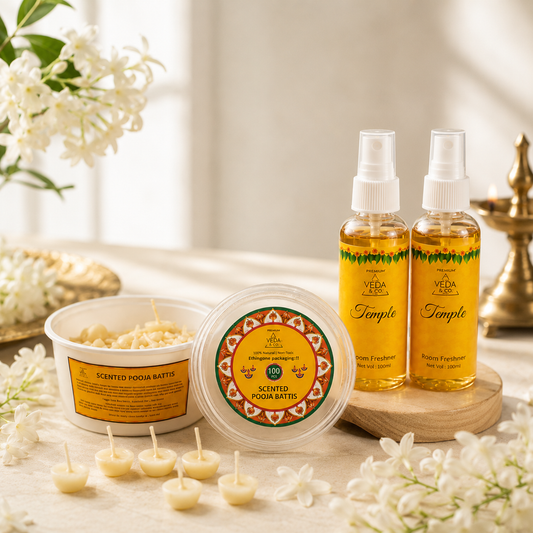
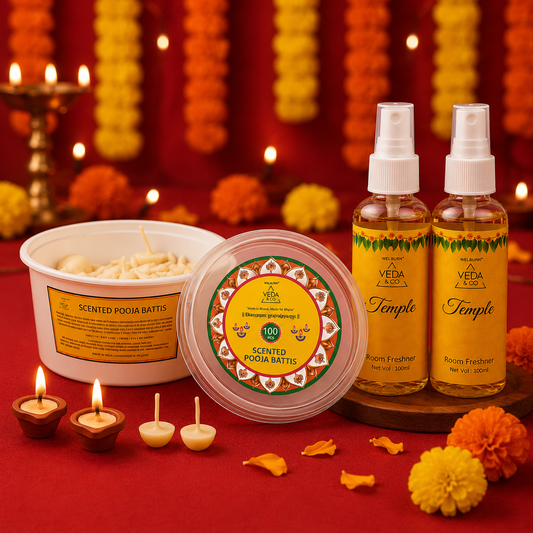
- Use a Veda & Co puja spray before beginning aarti to freshen the puja space — Camphor or Temple fragrance creates a particularly settled atmosphere for this ritual.
Frequently Asked Questions
Q: Can I use the Veda & Co clay diyas directly for aarti without a thali?
A: Using a thali is strongly recommended for aarti — it provides stability and a safe surface to hold. Holding a small clay diya directly during circular motion is less safe and less comfortable.
Q: Will the ghee spill during aarti?
A: With normal gentle circular motion and a steady hand, spilling is unlikely. The clay well holds the ghee securely under moderate movement. Avoid sharp tilts or very fast circular motion.
Q: How many diyas should I use for aarti?
A: Traditionally, one diya on the aarti thali is standard for home use. Some households use two or three — one at the centre and two flanking — but one is fully sufficient for a genuine aarti practice.
Q: Is it okay to reuse a diya for multiple aarti sessions on the same day?
A: Veda & Co's diyas are designed for a single continuous burn. Once the ghee is fully consumed and the flame extinguishes, the diya has completed its purpose and should be respectfully disposed of.