Daily Pooja Diya Ritual: Step-by-Step Guide for Morning and Evening Worship
The most powerful spiritual practice is the one done consistently, day after day, with loving intention. A daily diya for pooja ritual is one of the simplest, most accessible, and most transformative practices a Hindu household can maintain. At Veda & Co, we believe that the divine is always available — all we need is a clean space, a pure flame, and an open heart.
Why a Daily Pooja Diya Ritual Matters
In our busy modern lives, daily diya lighting is a moment of pause — a conscious transition from the outer world to the inner world. Many people find that a consistent daily ritual becomes a genuine source of calm and grounding over time -- less a single powerful moment and more a steady, repeated anchor point in the day.. Spiritually, it maintains the sacred energy of your home altar and invites continuous divine protection and grace.
Morning Pooja Diya Ritual: Step-by-Step
- Step 1 — Wake and Cleanse: Begin with a bath or at least washing your hands, face, and feet. Physical cleanliness is the first step toward sacred readiness.
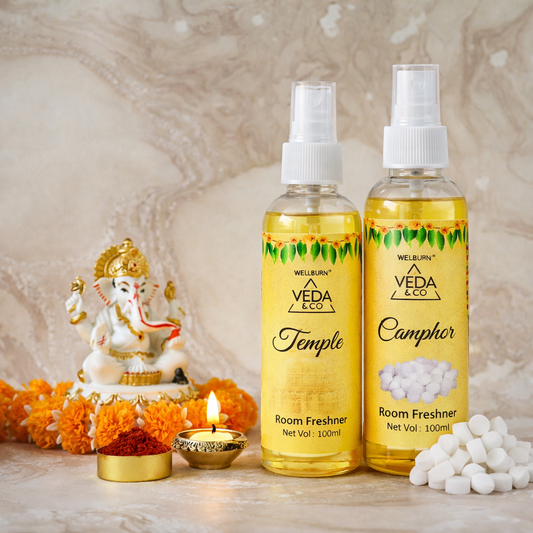
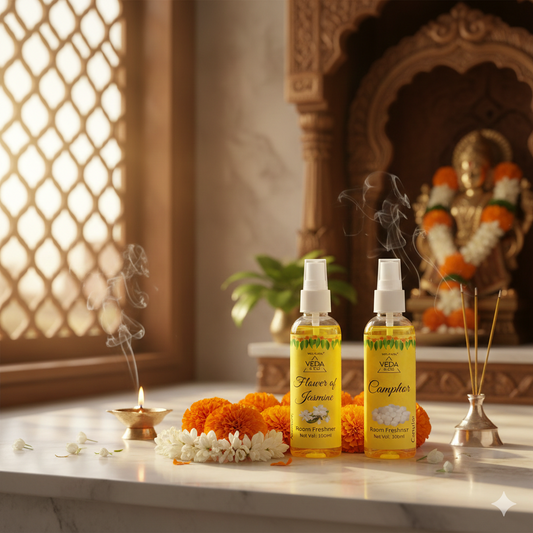
- Step 2 — Purify the Space: Spray Veda & Co's pooja spray around your altar to cleanse the energy of the space and invite divine presence.
- Step 3 — Wipe and Prepare the Diya: Clean your diya gently and fill it two-thirds full with pure cow ghee. Place a fresh cotton wick.
- Step 4 — Arrange Offerings: Place fresh flowers, a small portion of fruit or prasad, and any other offering items on your thali.
- Step 5 — Light the Diya: As you light the flame, recite the Deepa Mantra or simply hold a silent intention in your heart.
- Step 6 — Perform Aarti: Wave the diya gently before the deity in a clockwise circular motion while chanting or playing devotional music.
- Step 7 — Offer Prayers: Spend as little or as long as you wish in prayer, meditation, or chanting. The flame remains your witness.
Evening Pooja Diya Ritual: The Sandhya Deepam
The evening diya ritual — called Sandhya Deepam or Sayam Deepam — is particularly sacred in South Indian households but is practiced across India. It marks the transition from day to night and is believed to dispel the negative energies that accumulate during the day.
The evening puja follows a similar structure to the morning puja but may be more elaborate, including the chanting of Lalitha Sahasranama, Vishnu Sahasranama, or evening bhajans. The diya should be lit ideally at sunset — at the sandhya (twilight) hour — which Vedic astrology considers the most spiritually potent time of day.
Learn about all the diya types available for your daily ritual by visiting our main guide on diyas for pooja.
Mantra to Recite While Lighting Your Diya
This sacred verse honours the divine lamp:
'Deepajyoti para brahma, Deepajyoti janardana, Deepo haratu me papam, Deepajyothi namostute.' (Meaning: The flame of the lamp is the Supreme Divine. The flame removes my sins. I bow to the divine flame.)
Building a Daily Diya Ritual That Actually Sticks
Knowing how to light a diya is one thing — making it part of your everyday routine is another.
A daily diya ritual doesn't have to be elaborate or time-consuming. The key is to make it simple enough to fit naturally into your existing routine. A few small habits can make consistency feel realistic rather than aspirational.
1. Fix the Time, Not Just the Intention
Instead of deciding to light a diya "sometime during the day," connect it to something you already do every day.
For example:
-
Light it shortly after you wake up.
-
Include it as part of your morning pooja.
-
Light it before leaving for work.
-
Make it part of your evening wind-down routine.
When a ritual is connected to an existing daily habit, it's easier to remember and maintain.
2. Keep Your Pooja Supplies Within Reach
Convenience matters when you're trying to establish a daily routine.
Keep your diya pack, matches or lighter, and other regularly used pooja items together in a dedicated space. Having everything within easy reach removes the small friction of searching for supplies each morning or evening.
A simple, organised pooja shelf can make the routine much easier to maintain.
3. Don't Let One Missed Day Become a Missed Week
Missing a day doesn't mean you've failed at your routine.
If you skip a day because you're travelling, busy, or simply forget, start again the next day. There's no need to wait for a special occasion or restart from the beginning.
The value of a daily practice comes from making it part of your life over time, not from maintaining a perfect streak.
4. Prioritise Consistency Over Complexity
A daily diya ritual doesn't need to be elaborate.
A few quiet minutes to light the diya and offer a prayer can be enough to make it part of your everyday routine. Save more elaborate arrangements for festivals, special occasions, or days when you have more time.
Consistency can make a simple ritual feel more meaningful than an elaborate practice performed only occasionally.
Make Your Daily Diya Practice Simple
The best daily ritual is one that fits naturally into your life.
Choose a convenient time, keep your supplies ready, start small, and don't worry about occasional missed days. Whether you light a diya in the morning, evening, or as part of your family's existing pooja routine, keeping the practice simple can make it easier to sustain over time.
Frequently Asked Questions
Q: How many diyas should I light for daily pooja?
A: Traditionally, an odd number of diyas is considered auspicious. One diya is perfectly sufficient for daily worship. Some households light three or five. For special occasions, the number can be higher based on the ritual requirements.
Q: Should the diya face the deity or face the devotee?
A: The light of the diya should face the deity — meaning the wick end of the diya should point toward the idol or image being worshipped. This way, the divine flame illuminates and honours the deity directly.
Q: Can I use an electric diya for daily pooja?
A: Electric diyas are a modern convenience, but they lack the living flame that is central to Vedic ritual. For daily pooja, we strongly recommend a real ghee or oil diya. The actual combustion of pure ghee has spiritual and atmospheric properties that an electric bulb cannot replicate.
Q: What if I forget to light the diya one morning?
A: There is no spiritual punishment for missing a day — devotion is a matter of the heart, not perfection. Simply resume your practice the next day. The divine responds to sincere intention above all.