Diya for Pooja: The Complete Guide to Sacred Lamps in Hindu Worship
In every Hindu home, from the grandest mansion to the simplest village dwelling, a diya for pooja holds the most honoured place on the altar. The diya — a small, cup-shaped lamp — is not merely a source of light. It is a symbol of the divine, an offering made of flame, and the bridge between the human heart and the infinite. At Veda & Co, we celebrate and honour this tradition with our carefully crafted range of pooja diyas for every home and every ritual.
The Symbolism of the Diya in Hindu Tradition
The word 'Deepa' comes from the Sanskrit root 'Dip' meaning to shine, to illuminate, to blaze. In Hindu philosophy, light represents knowledge that dispels the darkness of ignorance. The four elements of a burning diya are rich with symbolism:
- The clay or metal body represents the Earth element — the physical vessel of the soul.
- The ghee or oil represents the Water element — the sustenance of life and consciousness.
- The wick represents the Air element — the breath that sustains the flame of awareness.
- The flame itself represents the Fire element (Agni) — the divine force that transforms everything it touches.
Together, a burning diya embodies the union of the five elements (Pancha Bhuta) and symbolises the presence of the divine in the material world.
Types of Diyas for Pooja at Veda & Co
The right diya for pooja depends on the deity you worship, the ritual you perform, and the aesthetic of your sacred space. Here is an overview of what we offer:
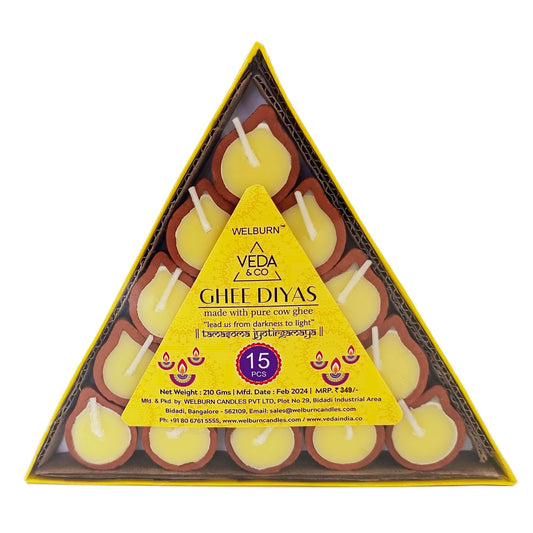
- Ghee Diyas — Our signature collection, filled with pure cow ghee for the most spiritually potent flame. Ideal for daily puja and major festivals.
- Single-Wick Diyas — Simple and meditative, perfect for quiet morning prayers and daily devotion.
- Decorative Pooja Diyas — Intricately designed for special occasions, available in beautiful gift sets.
Setting Up Your Pooja Space for Maximum Sacred Effect
The atmosphere of your pooja space deeply influences the quality of your devotion. Here is how to create an ideal environment:
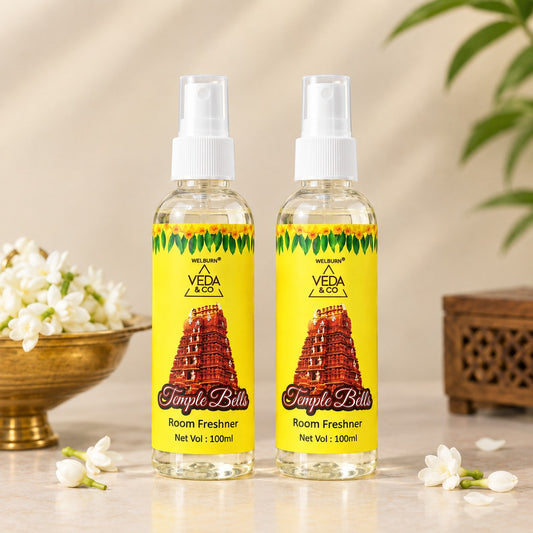
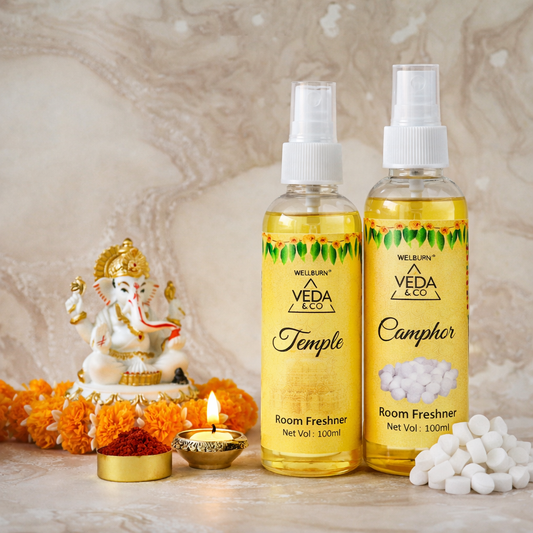
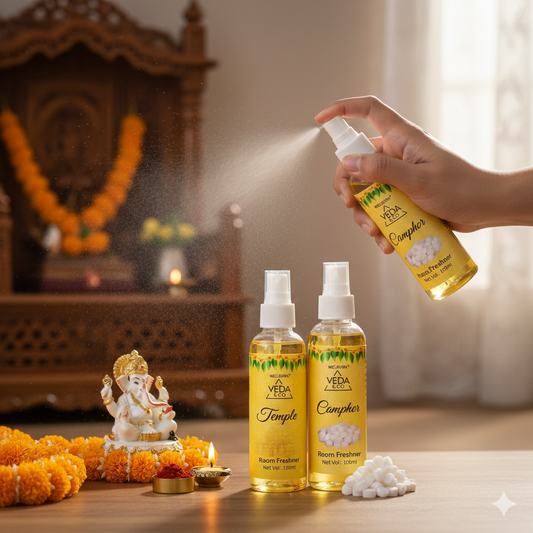
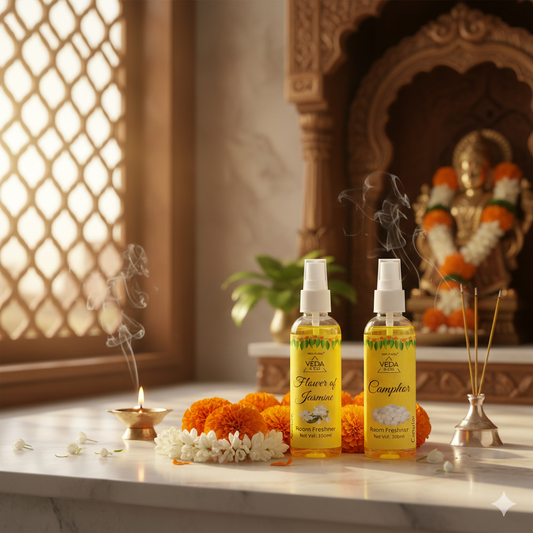
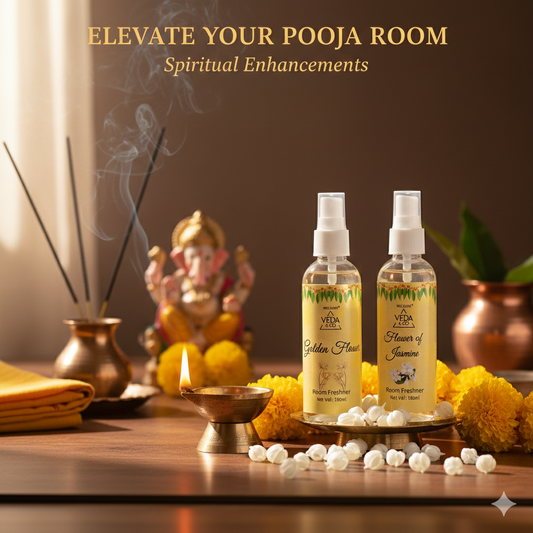
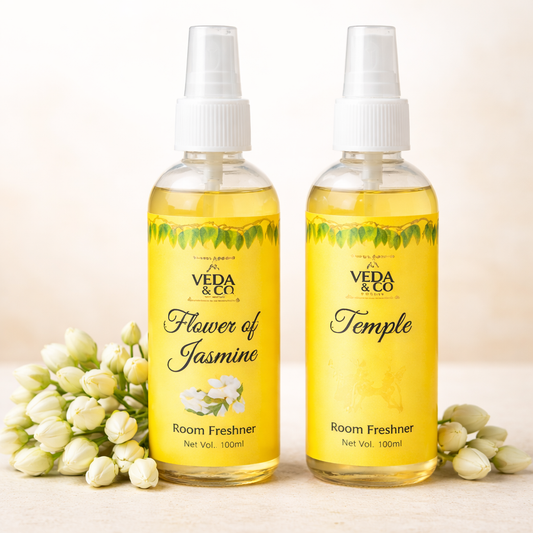
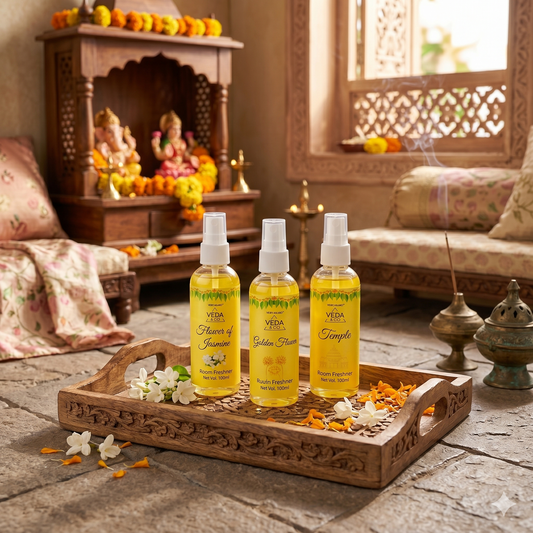
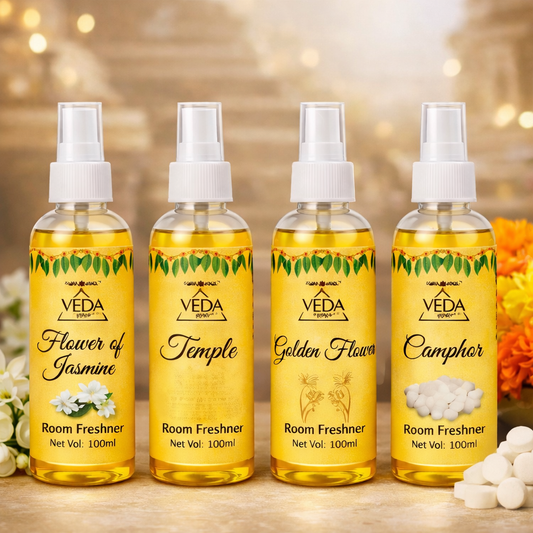
- Begin by cleansing the space: Veda & Co's pooja spray is formulated with sacred fragrances that purify the air and invite divine energies before you begin your ritual.
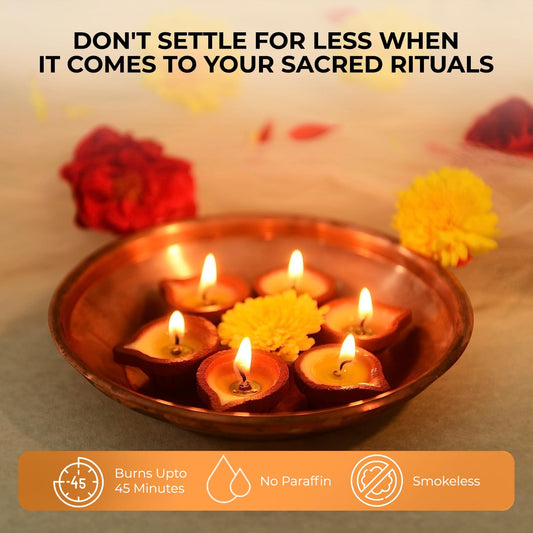
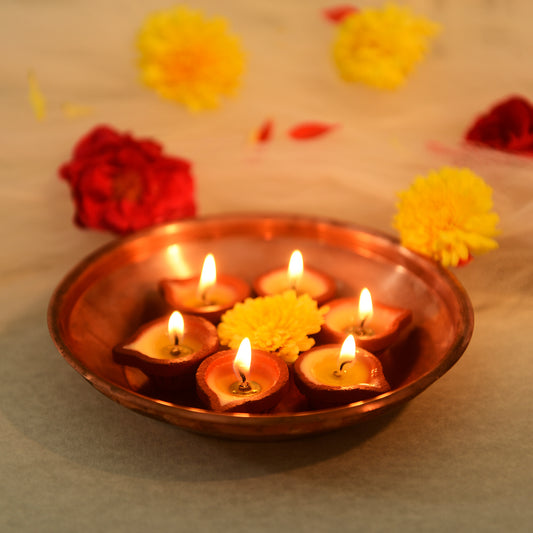
- Position your diya correctly: Place the diya at the centre-front of your altar, where its light illuminates the deity.
- Use fresh flowers and fruits: These natural offerings enhance the sacredness of the space.
- Include incense: The combination of diya light and incense fragrance creates a multi-sensory devotional experience.
The Ritual of Lighting the Diya for Pooja
The act of lighting a diya is itself a ritual. Ancient texts recommend:
- Wash your hands before touching the diya or the ghee.
- Mentally offer a prayer or mantra as you fill the diya and prepare the wick.
- Light the diya from another flame — traditionally a match or camphor — never from a lighter directly held over the ghee.
- As you light the flame, recite the Deepa Mantra:
- 'Shubham karoti kalyanam, arogyam dhana sampadah, shatrubuddhi-vinashaya, deepajyoti namostute.'
Caring for Your Pooja Diya
A diya that is well cared for carries forward the sacred energy of every puja it has witnessed. Clean your diya after each use while it is still slightly warm (for brass and copper) using a soft cloth. For clay diyas, a gentle rinse and air-dry is sufficient. Store diyas in a clean, dedicated space — never mixed with household items.
Choosing the Right Material for Your Diya for Pooja
The material of a diya can influence both its traditional significance and its practicality. From simple clay diyas to reusable brass and auspicious silver options, each material has its own place in a pooja setup.
1. Clay Diyas
Clay is one of the most traditional choices for diyas and is closely associated with the Earth element.
Clay diyas are:
-
Affordable and widely available
-
Suitable for daily pooja and festivals
-
Convenient when lighting multiple diyas
-
Biodegradable compared with many decorative alternatives
They are generally best suited for single or limited use, particularly during festivals when multiple diyas are traditionally lit.
2. Brass Diyas
Brass is a durable and reusable option that works particularly well for a permanent pooja space.
Brass diyas can be used regularly and cleaned between uses. Over time, the metal can develop a natural patina, giving the diya a distinctive appearance.
A brass diya can also serve as a long-term centrepiece on a home altar.
3. Silver Diyas
Silver diyas are often associated with auspicious occasions and are commonly chosen for significant celebrations, such as:
-
Housewarmings
-
Weddings
-
Major festivals
-
Religious ceremonies
-
Gifting occasions
While silver has a special place in traditional settings, its higher cost and maintenance requirements can make it less practical for everyday burning.
Which Diya Material Should You Choose?
For many households, using a combination can offer both convenience and tradition. You might use clay diyas for regular practice and festivals, while keeping a brass or silver diya as a centrepiece for your permanent altar or special occasions.
Decoration and Arrangement Ideas for Your Pooja Diyas
Diyas aren't only part of the pooja ritual — they can also become an important element of festive home decoration.
1. Create a Balanced Altar Arrangement
Place the primary diya towards the centre-front of your altar and arrange smaller decorative diyas around it. Symmetrical placement can create a neat and balanced appearance.
2. Decorate the Doorstep and Entrance
A row of diyas along the entrance or threshold can create a warm and welcoming atmosphere.
During festivals such as Diwali, decorating entrances with diyas is a popular tradition in many Indian households.
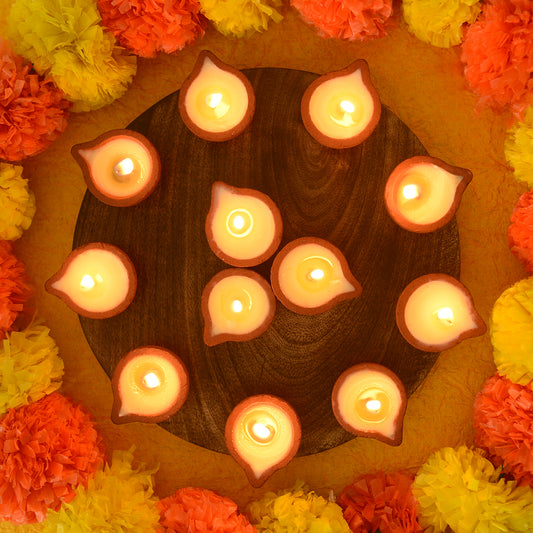
3. Pair Diyas with Rangoli
Place diyas around the points or edges of a rangoli design to combine traditional floor decoration with the warm glow of oil or ghee lamps.
This can create an eye-catching centrepiece for festive gatherings.
4. Brighten Windowsills and Balconies
Small clay diyas can be placed along suitable windowsills or balcony areas to extend the festive glow throughout your home.
Always ensure diyas are placed on stable, heat-resistant surfaces and away from curtains, plants, paper, and other flammable materials.
Finding the Right Diya for Your Home Setup
You don't need a dedicated pooja room to create a meaningful space for your daily ritual. The right diya can work beautifully in spaces of different sizes.
Dedicated Pooja Room
With a dedicated pooja room, you have more flexibility. A larger brass diya can serve as the centrepiece, complemented by smaller clay diyas for regular pooja and festivals.
Wall-Mounted or Shelf Altar
For a compact altar, a small single-wick clay diya can provide the traditional ritual element without taking up too much space.
Shared Living Spaces
If your diya is placed in a shared living area, choose a stable and appropriately sized diya with a raised rim where possible. This can help contain minor oil or ghee spills.
Keep the diya on a clear, heat-resistant surface and away from anything that could catch fire.
Make Your Pooja Space Your Own
Whether you have a large pooja room or a small dedicated corner, there's no single way to arrange your diyas. Choose materials and designs that suit your space, routine, and occasion.
Ultimately, the sincerity of the ritual matters more than the size or scale of the altar. A simple diya, thoughtfully placed and safely lit, can bring warmth and tradition into your everyday pooja.
For the most complete pooja experience, we invite you to explore our full range of ghee diyas for pooja alongside our pooja sprays — two sacred tools that work in harmony to elevate every worship moment.