How to Make a Cow Ghee Diya at Home: Traditional Method
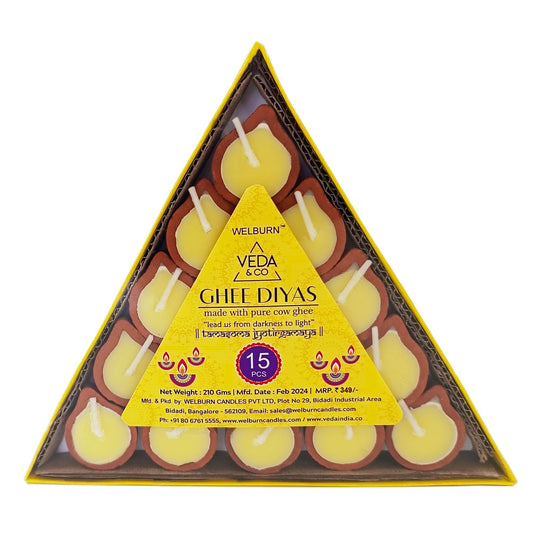
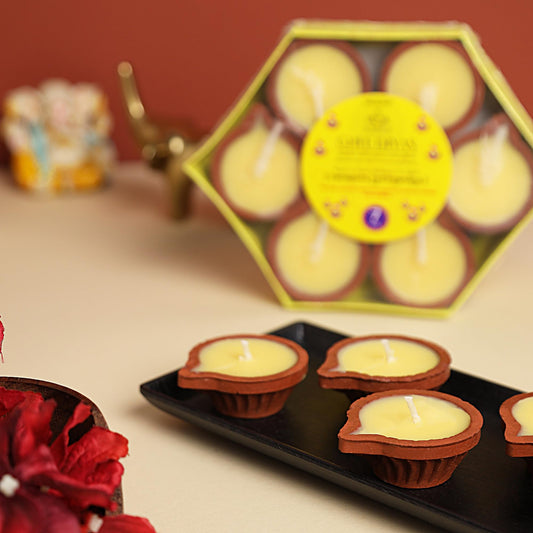
There is something deeply satisfying about preparing your cow ghee diya by hand — filling it with your own measured ghee, threading the wick with care, and then lighting a flame that you have truly prepared with intention. This step-by-step guide from Veda & Co walks you through the traditional method of preparing a cow ghee diya for your daily puja or special rituals.
What You Will Need
- A clean diya (clay, brass, copper, or silver)
- Pure cow ghee (Go-Ghrita) — ensure it is genuine, unadulterated cow ghee
- Pure cotton wicks (handmade cotton balls rolled into thin wicks are traditional)
- A small spoon or laddle for pouring ghee
- A matchstick or small candle flame for lighting
Choosing the Right Diya
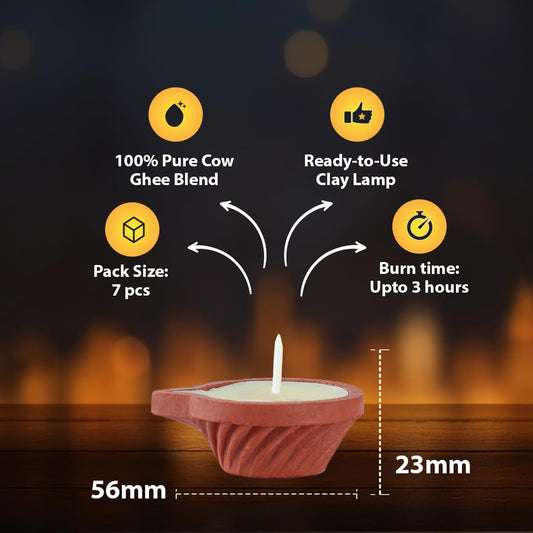
Before you begin, choose your diya thoughtfully. For daily puja, a simple clay or small brass diya works beautifully. For extended prayers, festivals, or aarti, a larger brass or copper diya with a deeper well is preferable as it holds more ghee and burns longer. Browse Veda & Co's ghee diya collection for a wide range of beautifully crafted options suitable for every occasion.
Preparing the Wick
The wick is the living thread of your diya — it is what carries the flame. Use only pure, unbleached cotton for your wick. Here is the traditional method:
- Take a small tuft of raw cotton (not synthetic cotton or tissue).
- Roll it tightly between your palms into a thin cylinder, approximately 2-3cm long.
- One end should be slightly more tapered (this end goes into the ghee); the other end is left a little looser (this is what you light).
- If using pre-made cotton wicks, ensure they are round and uniform in thickness — not frayed or uneven.
Filling the Diya with Cow Ghee
Ensure the diya is completely clean and dry. Any moisture can cause the flame to sputter or extinguish.
- If the cow ghee is solid (as it often is in cooler weather), warm a small quantity gently until just liquefied.
- Pour the ghee into the diya, filling it to approximately two-thirds of the well. This is the ideal level — enough to sustain a long burn without risk of overflow.
- Place the prepared wick with the tapered end submerged in the ghee and the loose end rising above the rim of the diya by about 0.5 to 1 cm.
- Allow the wick to absorb the ghee for 2-3 minutes. You will see the ghee slowly wicking upward through the cotton — this ensures immediate ignition when lit.
Lighting the Sacred Flame
- Hold a lit matchstick or a small taper candle near the top of the wick.
- Touch the flame to the wick gently — the ghee-soaked cotton should catch almost immediately.
- If the flame does not catch on the first attempt, wait 30 seconds and try again. Do not force it — a patient, deliberate lighting is itself a meditative act.
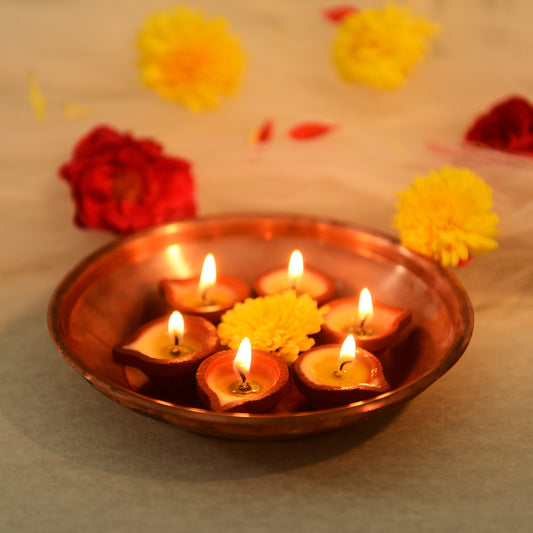
- Once lit, allow the flame to steady for a few moments before proceeding with your puja.
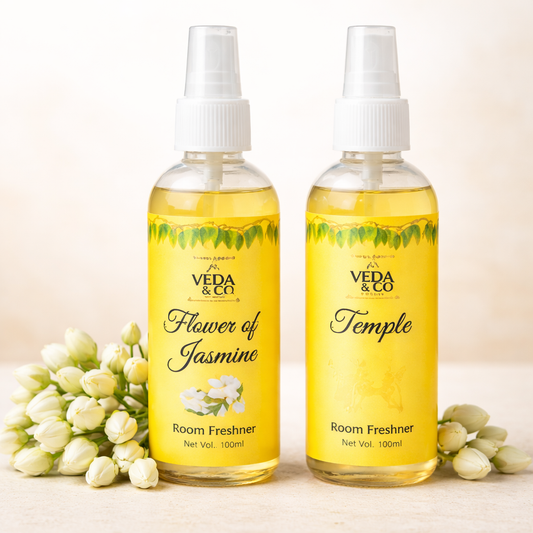
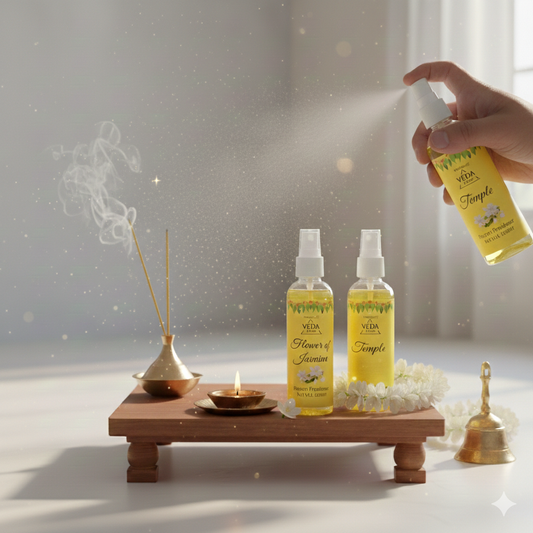
For the most complete puja experience, spray your space with Veda & Co's pooja spray before lighting the diya, and read our main guide on the significance of the cow ghee diya to deepen your understanding of what you are creating.
Frequently Asked Questions
Q: Can I use homemade ghee for a diya?
A: Yes — in fact, homemade cow ghee made from scratch through traditional churning (bilona method) is considered the most spiritually potent option. If you make ghee at home from pure cow milk or cream, this is an extraordinarily auspicious choice for your diya.
Q: What is the ideal wick thickness for a cow ghee diya?
A: For small to medium diyas, a wick the thickness of a pencil is ideal. Thicker wicks burn more ghee and produce a larger, more dramatic flame suitable for aarti. Thinner wicks burn ghee more slowly and produce a smaller, more meditative flame for quiet prayer.
Q: Why does my ghee diya flame flicker and go out?
A: The most common reasons are: too little ghee (the wick is not properly submerged), a wick that has not absorbed enough ghee before lighting, a draft or air movement near the diya, or a wick that is too thin. Ensure the diya is sheltered from drafts and that the wick has absorbed ghee for at least 2-3 minutes before lighting.
Q: Can I reuse the wick after the flame goes out?
A: If the wick is still intact and has not burned all the way down, it can be gently straightened, trimmed slightly at the top if charred, and reused. Trim away the blackened end to ensure a clean, smoke-free flame for your next use.