Cow Ghee Diya and Air Purification: What the Science Actually Says
Part of the Cow Ghee Diya Purity Guide. Also see: Navratri Cow Ghee Diya Guide | Cow Ghee Diya vs Synthetic Candle
The Claim and the Question
You have probably heard it said that lighting a cow ghee diya purifies the air in your home. Short answer: the claim is real but needs precision. Here is what the evidence actually supports.
What the Research Supports (Honestly)
Strong evidence: Havan (large-scale fire ritual)
Most of the robust air-purification evidence relates to havan — the Vedic fire ritual where large quantities of ghee and medicinal herbs are burned together. Havan -- the large-scale Vedic fire ritual -- has long been associated with air-purifying properties in traditional practice.
Moderate evidence: A single diya
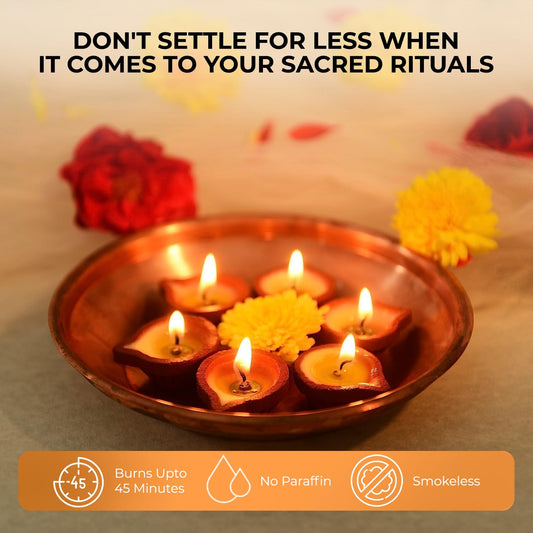
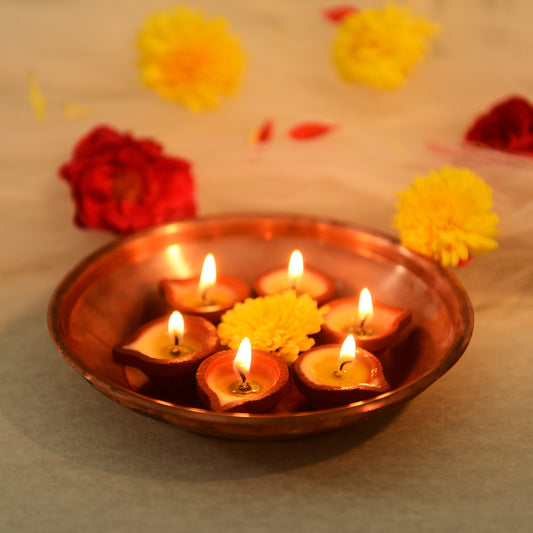
For a single small clay ghee diya, the effect is best described as a subtle atmospheric improvement and a grounding, familiar scent associated with daily puja.
A Note on What You're Burning
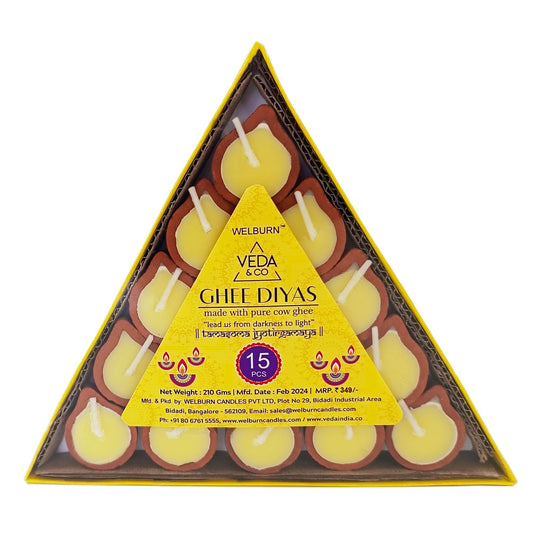
A cow ghee diya burns pure ghee and a natural cotton wick -- no synthetic fragrance, dye, or added chemicals. This is part of why it's traditionally preferred for daily puja and havan.
Conclusion
The air-purifying idea behind a cow ghee diya has roots in genuine tradition -- best understood as a gentle, complementary part of your puja practice rather than a guaranteed measurable effect. Return to the Complete Cow Ghee Diya Guide.
Frequently Asked Questions
|
Q1 |
Does burning a cow ghee diya really purify the air? |
|
A |
A cow ghee diya provides a subtle atmospheric improvement as part of your puja practice, along with the traditional and spiritual significance of the ritual itself |
|
Q2 |
Is a cow ghee diya better for indoor air than a scented candle? |
|
A |
A cow ghee diya is valued for its pure, simple composition -- ghee and a natural cotton wick, without synthetic fragrance or dye. |
|
Q3 |
What is butyric acid and why does it matter for a ghee diya? |
|
A |
Butyric acid is a naturally occurring compound in cow ghee, part of what gives it its distinctive traditional scent when burned. |
|
Q4 |
Can a cow ghee diya help with stress or anxiety? |
|
A |
Many people find the scent of burning ghee grounding and calming as part of a daily puja ritual -- this is a traditional association, not a medical claim. |
|
Q5 |
How many ghee diyas should I burn for air purification? |
|
A |
For atmospheric benefit and daily puja: 1 diya in a slightly ventilated room during your puja session (20–45 minutes). This is the traditional practice and well within safe indoor air quality norms. |