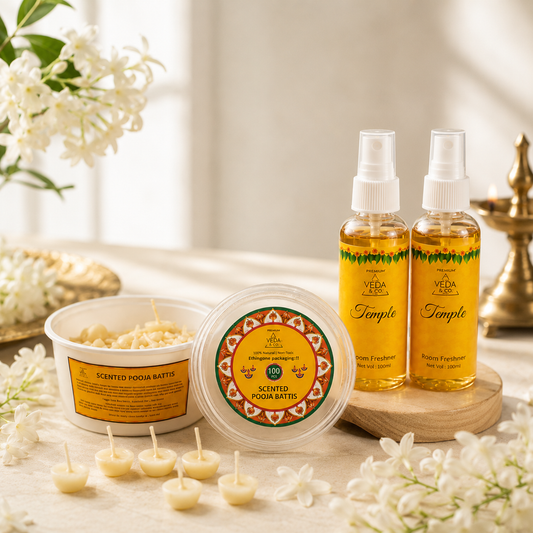
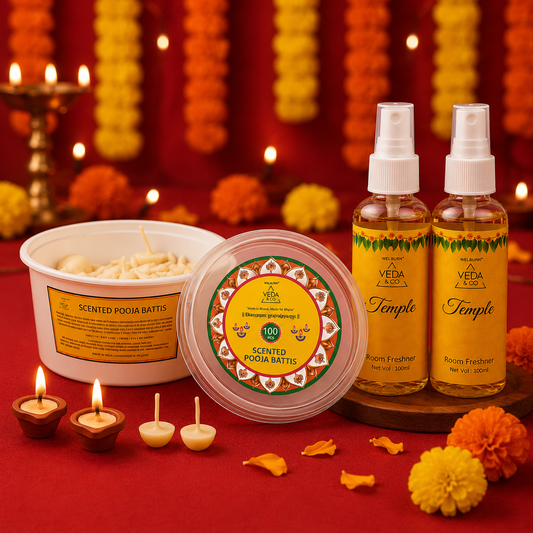
Cow Ghee Diya in Bulk: A Buying Guide for Temples, Societies and Events
Part of this cluster. Also see: Cow Ghee Diya: Price, Value and What You're Really Paying For | Cow Ghee Diya for Regional Festivals & Karthika Masam | Cow Ghee Diya Myths vs Facts
Buying a cow ghee diya for your own home altar is a simple decision. Buying for a temple event, a housing society Diwali celebration, or a community Karthika Masam observance is a different exercise entirely — one that comes down to estimating quantity accurately and choosing the right mix of pack sizes.
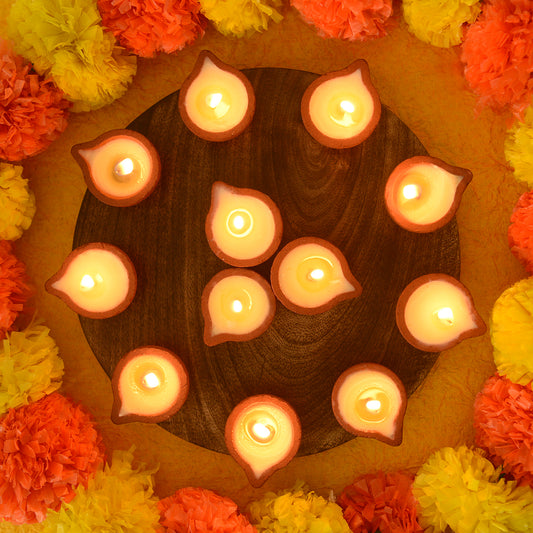
Start with a headcount-based estimate rather than guessing. For a community lamp-lighting event, a reasonable planning figure is one to two diyas per household or per attending family, plus a buffer of about 15% for breakage, no-shows overestimated, and last-minute additions. A housing society of 80 families lighting diyas together, for instance, comfortably plans around 150–180 pieces.
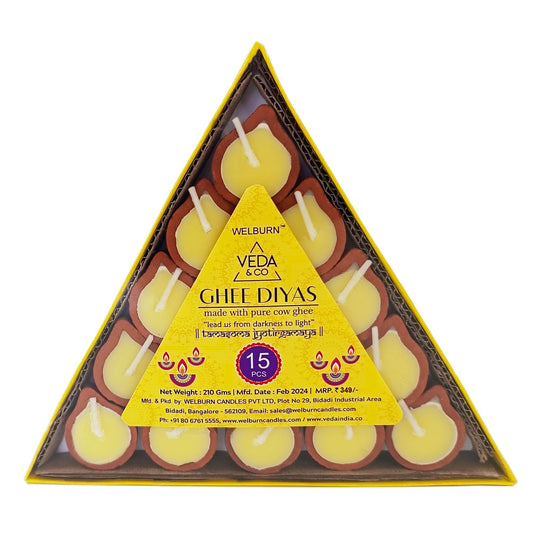
For quantities at this scale, larger packs make both logistical and financial sense. The 60-piece pack brings the cost per diya down meaningfully compared to buying multiple smaller packs, and ordering in fewer, larger units also reduces the packaging and handling overhead for whoever is managing distribution on the day.
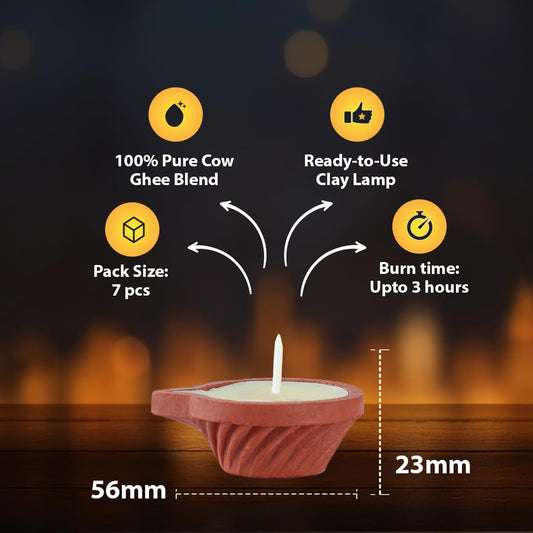
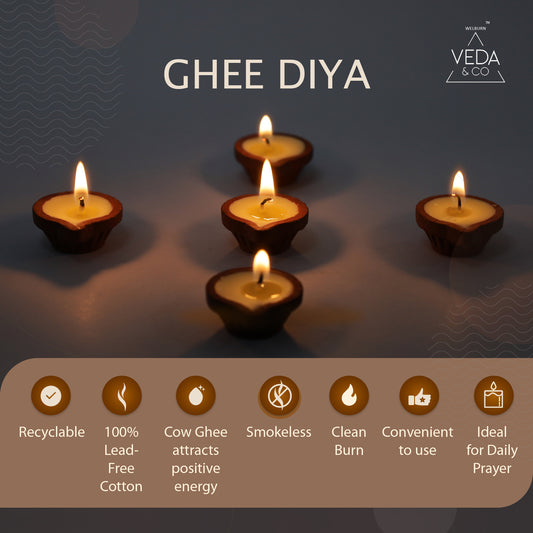
Burn time matters more for institutional use than it might for a single home altar. A temple event running through a full evening aarti benefits from the longer-burning 7-piece format rated up to 3 hours for the main altar lamps, while diyas handed out to individual attendees for a shorter lighting moment can use the shorter-burn 30-piece pack without anyone noticing the difference.
Order lead time is worth planning for separately from quantity. Festival periods — Diwali, Karthika Masam, and Navratri especially — see a genuine spike in demand across sellers, and ordering even a week or two ahead of the actual date reduces the risk of stock shortages when everyone else is placing the same order at the same time.
If your temple or society orders regularly across the year rather than just once for Diwali, it's worth tracking your typical monthly or seasonal usage so future orders can be sized accurately rather than re-estimated from scratch each time.
Frequently Asked Questions
How many cow ghee diyas should a temple order for a community event?
A reasonable starting estimate is one to two diyas per attending household, plus roughly 15% buffer for breakage and last-minute additions.
Is it cheaper to buy larger packs for bulk events?
Yes, larger packs like the 60-piece bring the effective cost per diya down compared to ordering multiple smaller packs to reach the same total.
How far in advance should we order for Diwali or Karthika Masam?
Order at least one to two weeks ahead of major festival dates, since demand spikes across sellers during these periods and can affect stock availability.
Should every diya in a bulk order have the same burn time?
Not necessarily. Longer-burning diyas suit main altar lamps during extended aarti, while shorter-burn diyas work fine for individual attendees at a lighting moment.