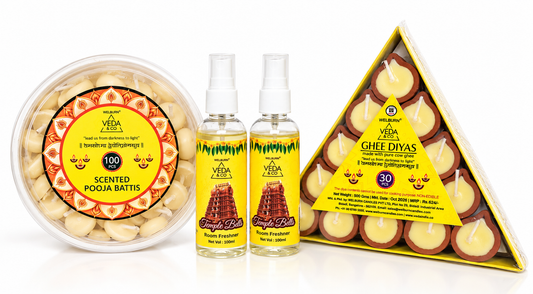
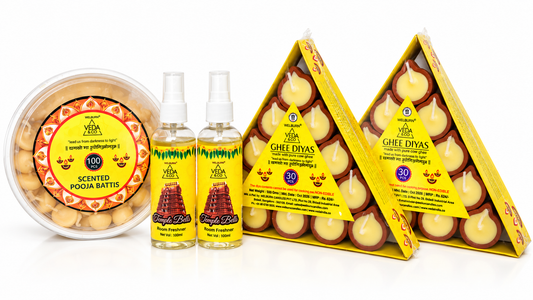
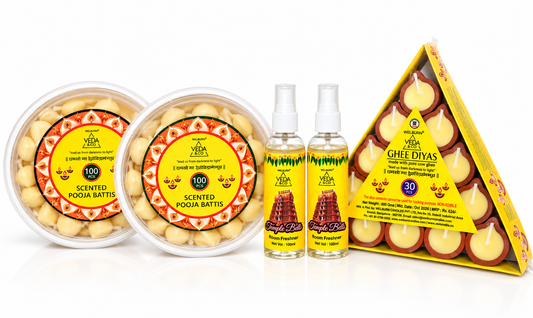
Scented Tealights vs Ghee Diyas: When to Use Which for Pooja
Both a scented tealight and a ghee diya put a flame into a pooja space, but they aren't really interchangeable once you look at what each is actually built for. This sub-blog is part of our Scented Tealights for Pooja & Festive Décor Guide and breaks down when to reach for which.
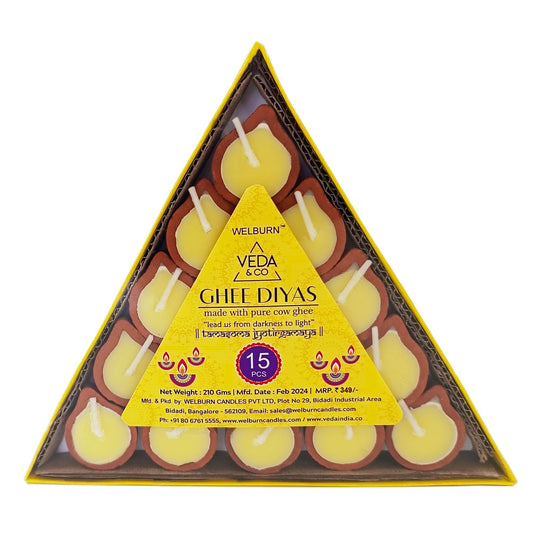
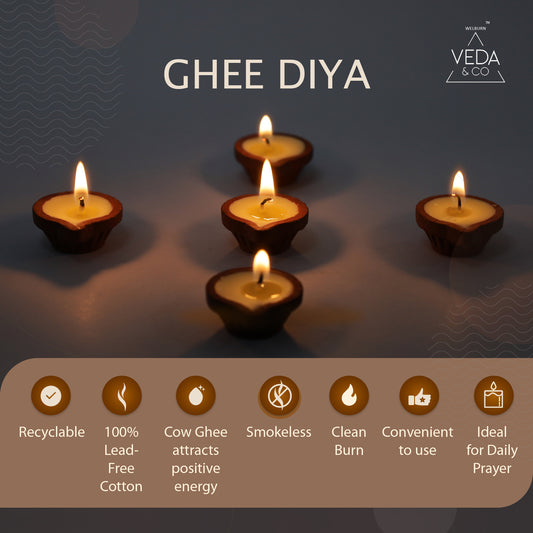
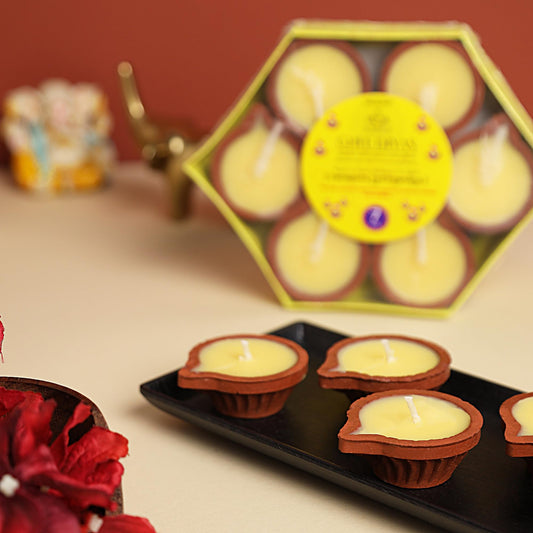
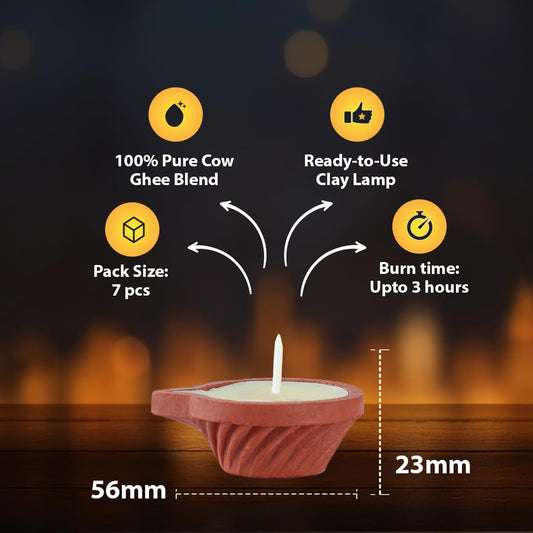
Ghee Diyas: The Ritual Standard
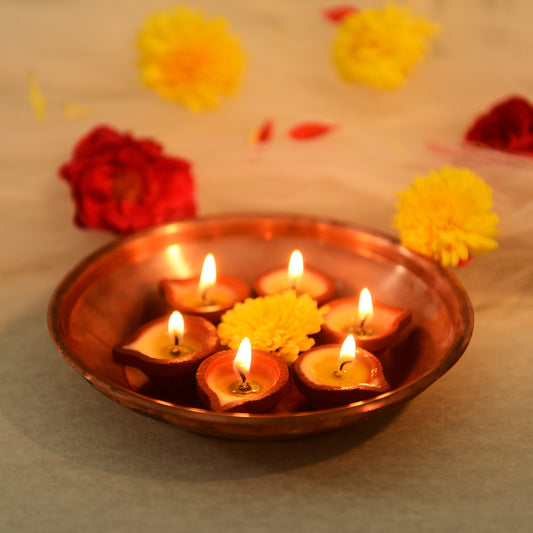
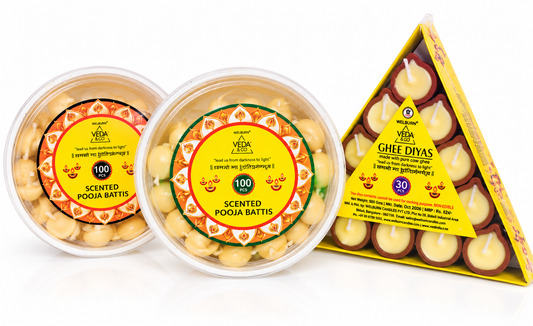
A cow ghee diya carries the traditional and ritual weight that most formal pooja practices call for - ghee as a fuel source has specific significance in Hindu ritual practice that a wax-based candle doesn't carry. For aarti, formal rituals, and the main altar lamp, a ghee diya remains the default choice in most households.
Scented Tealights: Convenience and Fragrance
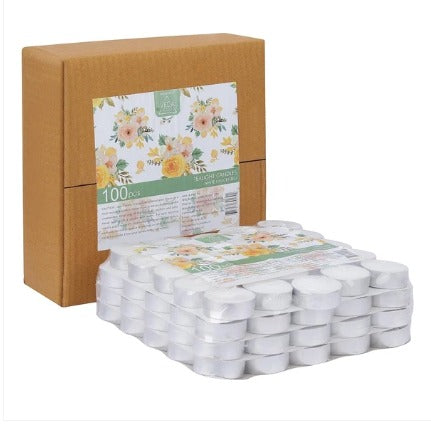
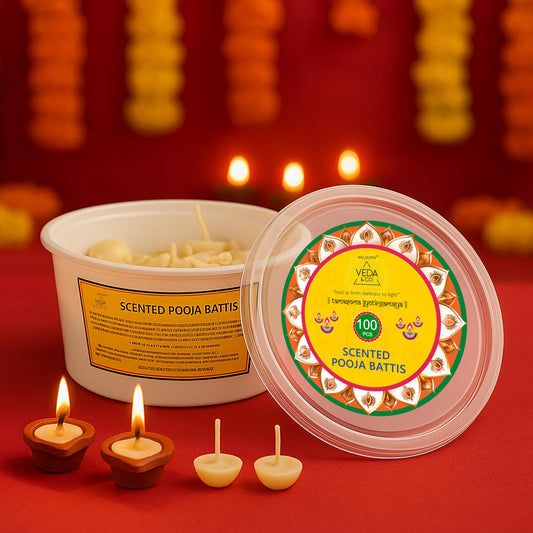
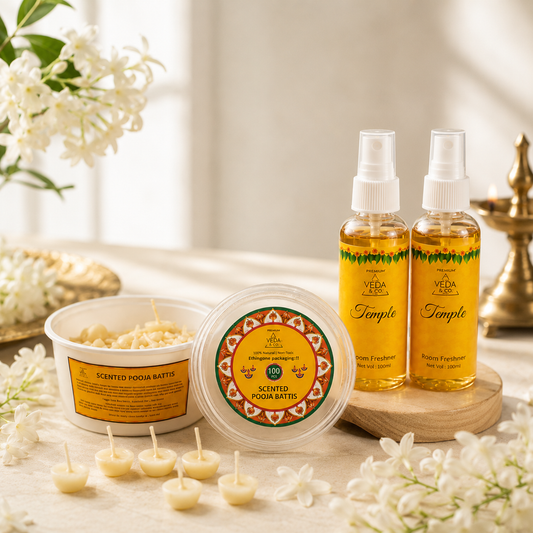
A tealight is faster to light, doesn't need topping up mid-use, and adds a fragrance layer that a plain ghee flame doesn't. This makes it well suited to daily convenience lighting, secondary spots around a puja area, or festive decor that isn't part of the core ritual itself.
A Simple Way to Decide
● Formal aarti or the main altar lamp: ghee diya
● Daily quick lighting when time is short: scented tealight
● Extra spots around the puja area or home for ambiance: scented tealight
● Festive occasions where tradition matters most (Diwali night, major poojas): ghee diya, often alongside tealights for supporting decor
Using Both Together
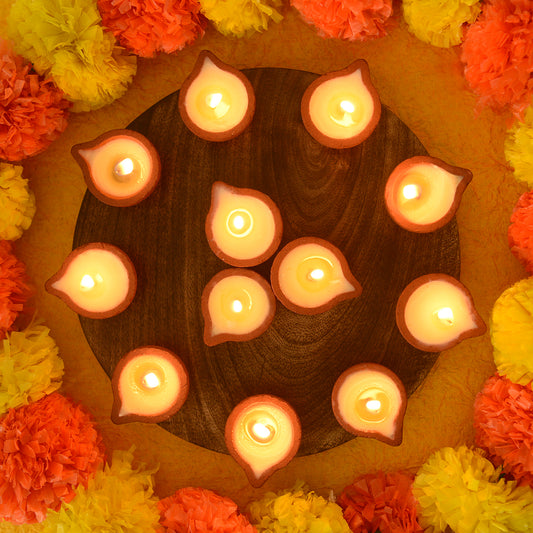
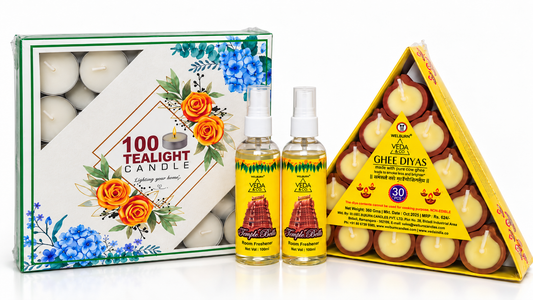
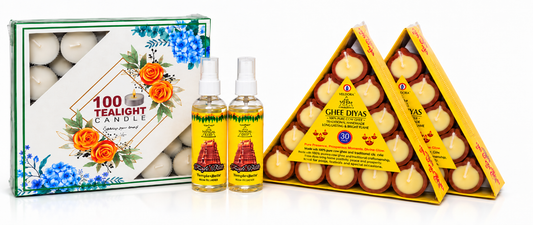
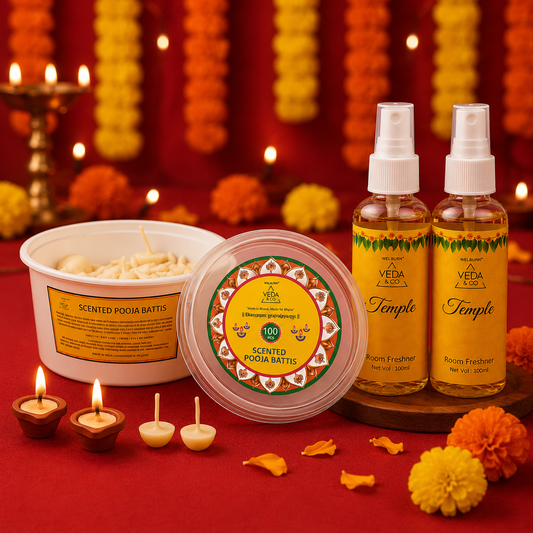
Most households don't actually need to choose one over the other - a ghee diya for the core ritual and scented tealights filling in supporting spots is a common and practical combination. If you're setting up for Diwali specifically, our Diwali diya buying guide covers how the two formats work together across a full home setup, and our guide on choosing the right burn-time pack helps you buy the right tealight quantity for the occasion.
FAQs
Q1. Can I replace my ghee diya with a scented tealight for daily pooja?
You can for convenience, but a ghee diya remains the more traditional choice for formal ritual purposes, since ghee carries specific ritual significance that a wax candle doesn't.
Q2. Are scented tealights appropriate for aarti?
A ghee diya is generally preferred for formal aarti and the main altar lamp, with tealights better suited to supporting or decorative lighting around the space.
Q3. Why do scented tealights smell but ghee diyas don't?
Scented tealights are made with fragrance oils built into the wax, while a traditional ghee diya's flame is unscented by design, focused on ritual purity rather than fragrance.
Q4. Can ghee diyas and scented tealights be used together in the same pooja setup?
Yes, this is a common combination - a ghee diya for the core ritual with scented tealights filling in supporting spots around the altar or home.